The Bomb Girls Legacy Foundation actively has been collecting artefacts for Canada’s new war worker museum, to be established eventually in an original property on the old GECO lands in Scarborough, Ontario. Our current collection includes fuses, bullets, stamps, pins, a munitions box, factory newspapers, books, photographs, posters, and letters. A sampling of our acquired artefacts is shared below. If you have an artifact from a war plant in Canada, we hope you will consider donating it to our collection. Perhaps they are tender love letters written between a bomb girl and her beau fighting overseas. Perhaps, it’s a photo of your loved one working at a plant. Perhaps, it’s handkerchief or apron that your loved one wore. All artifacts are welcome. Your contribution will be noted as to its provence, donor, dates, and any other pertinent facts to honour your loved one. We thank you.
Munitions prepared in Canada during the Second World War necessitated safe transportation to theatres of war. Workers in factories across the nation built a seemingly endless supply of sturdy wooden boxes. Unglamourous, yet a vital and indispensable requirement of war, these boxes are, for the most part, just a memory of a nation fighting for freedom.
This wooden box for transporting munitions was made by Canadian Industries Limited which managed several ammunition plants in Canada during the war. Box stampings mention the Beloiel, Quebec, James Island, B.C., Nobel, Ontario, Brainerd, Manitoba, and Calgary, Alberta C.I.L. factories.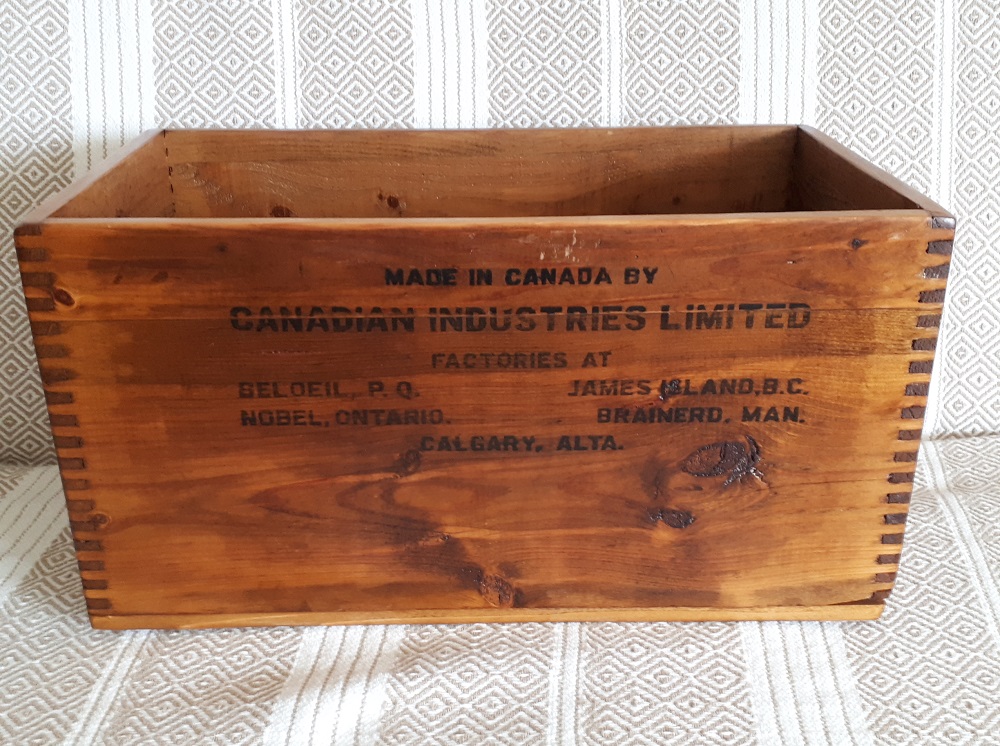
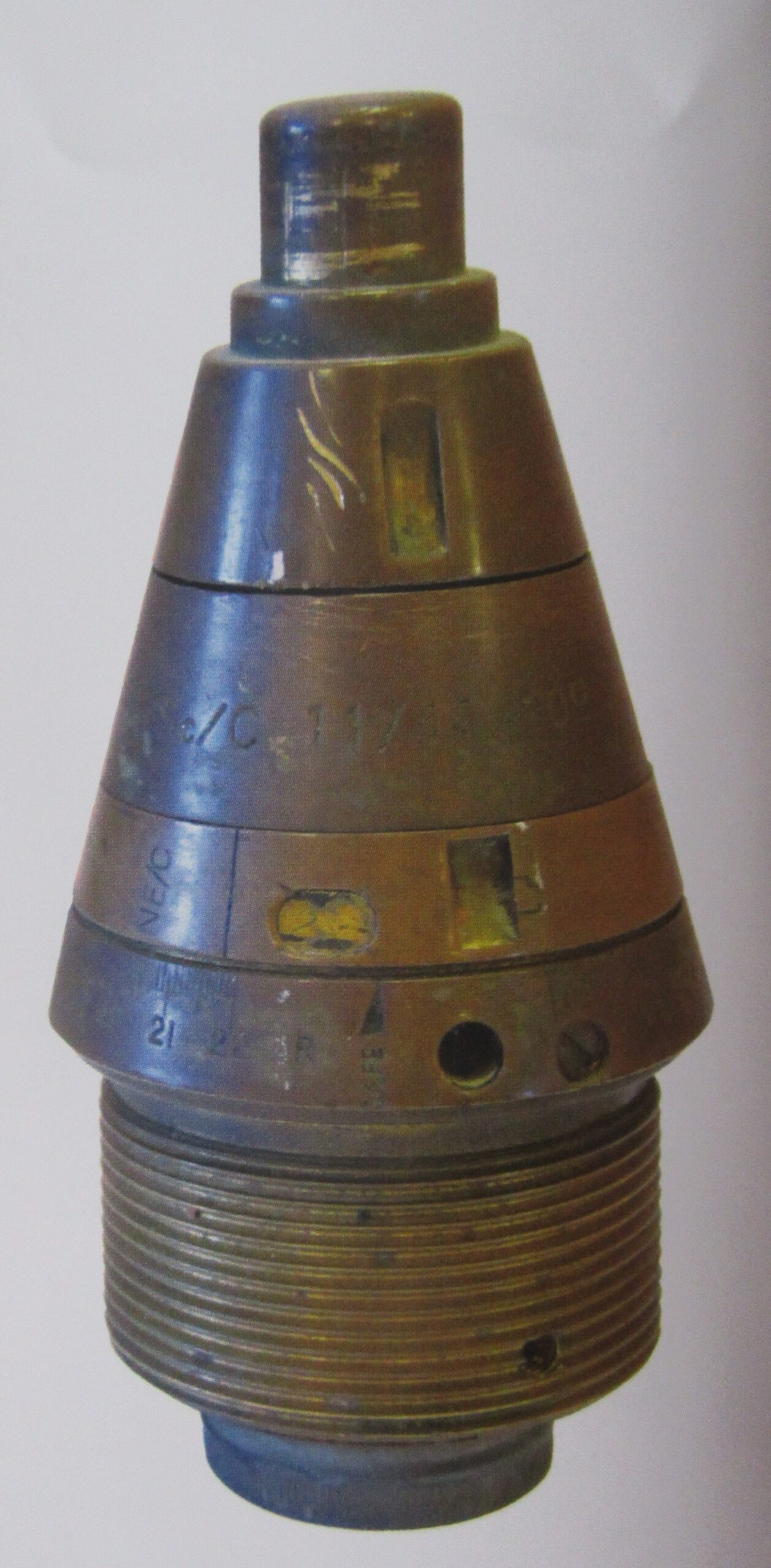
One of the original 11 munitions filled at the Scarborough GECO factory during the Second World War, the No. 199 fuse was used with 3.7-inch anti-aircraft shells. 3,207,815 units were filled at GECO, then shipped either to the D.I.L. Pickering Works in present-day Ajax, Ontario, or to C.C.M.I. Cherrier in Quebec, where its shells were filled. Each fuse cost the Canadian government $3.05 to fill.
A No. 199 fuse filled at the Scarborough GECO munitions factory.In 2021, this piece of shrapnel was found in Nuland, located about eight kilometres east of 's-Hertogenbosch—colloquially known as Den Bosch—in the Netherlands. The fragment with “Sc/C” still visible, indicated that the fuse had been filled at the GECO munitions factory in “Scarborough/Canada.” The city of Nuland in Holland suffered greatly at the hands of the Nazis, both during its occupation as well as during its liberation. The city was shelled by the Allies and the Germans during Operation Market Garden in September 1944. On October 22, Operation Alan began with the objective of liberating ’s-Hertogenbosch, an old city interconnected by rivers, waterways, and canals. Truly, a remnant of war, this jagged piece of metal is an object of humility – a stark reminder of the cost of war.
Fuse fragment found near Nuland in the Netherlands in 2021.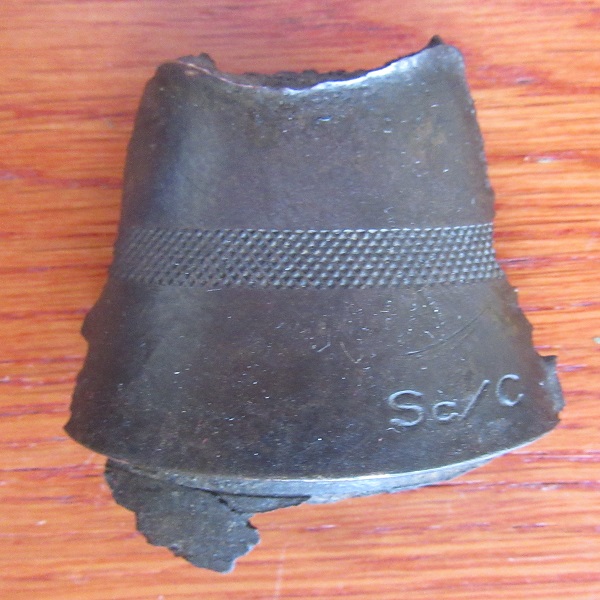
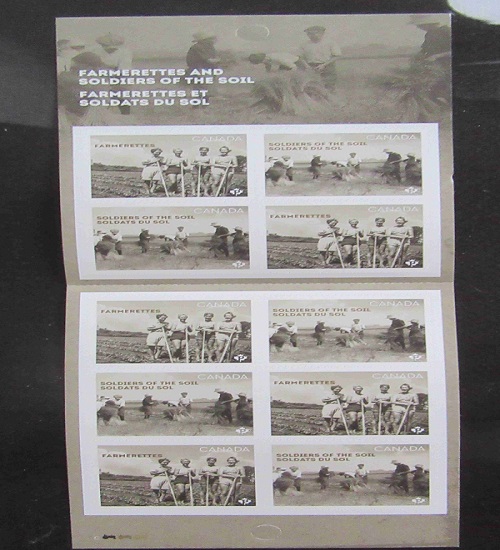
In 2024, Canada Post issued a commemorative stamp saluting its Farmerettes, women who served on the home front by working on Ontario farms. Estimates suggest between 20,000 to 30,000 women stepped into farming roles vacated by men enlisting and shipping overseas. Food was needed to feed Canadians as well as feeding troops fighting on foreign soil. Women, as young as 16 years of age, literally rolled up their sleeves, and dug deep to serve Canada in this unique, yet vitally important, role.
Canadian postage stamps commemorating Ontario’s Farmerettes.The D.I.L. munitions factory – also referred to as the Pickering Works – issued an employee newspaper, like many other plants across Canada during the Second World War.
The last issue—July 1945— of “The Commando,” the employee newspaper published by Defence Industries Limited located in Ajax, Ontario.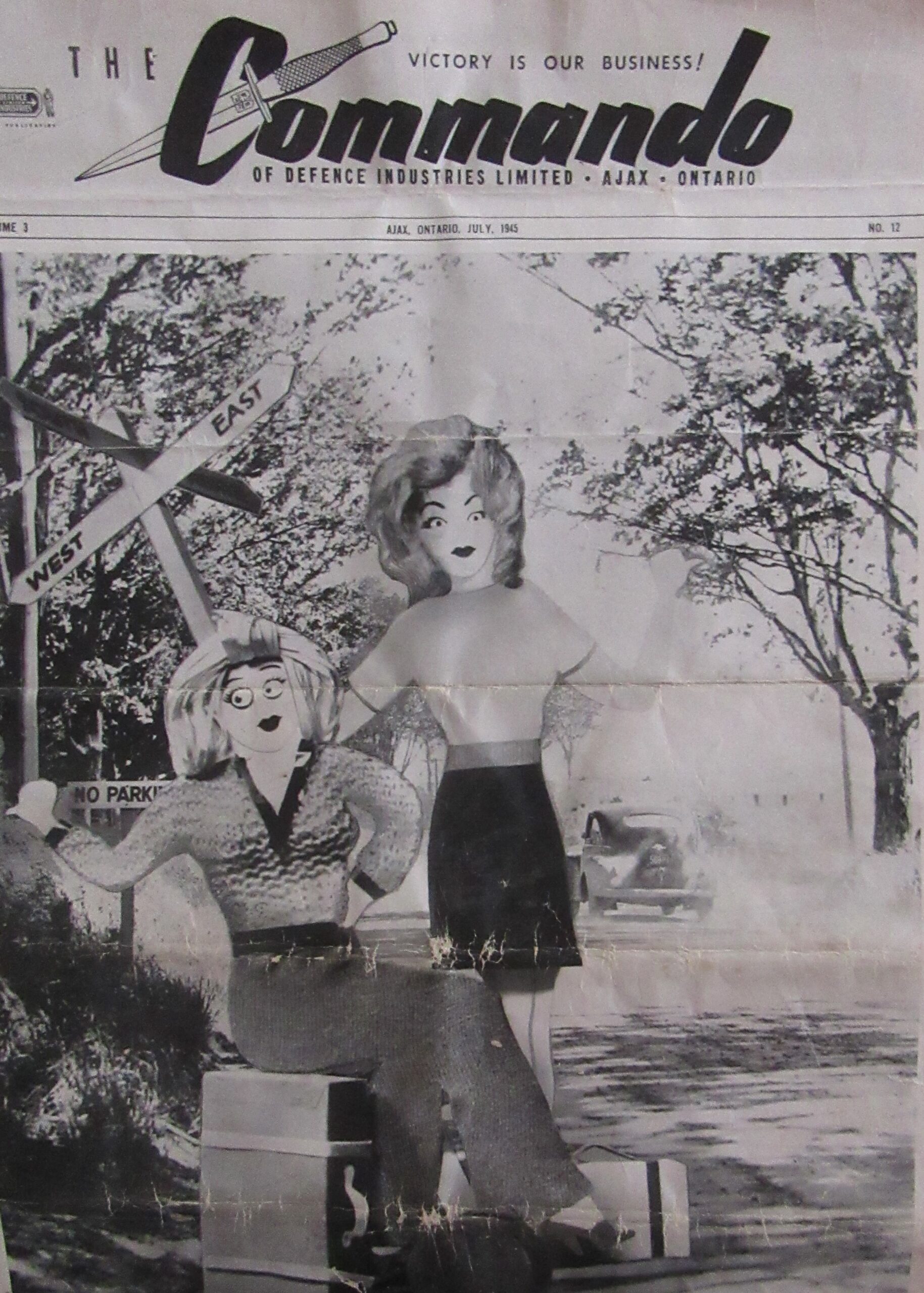
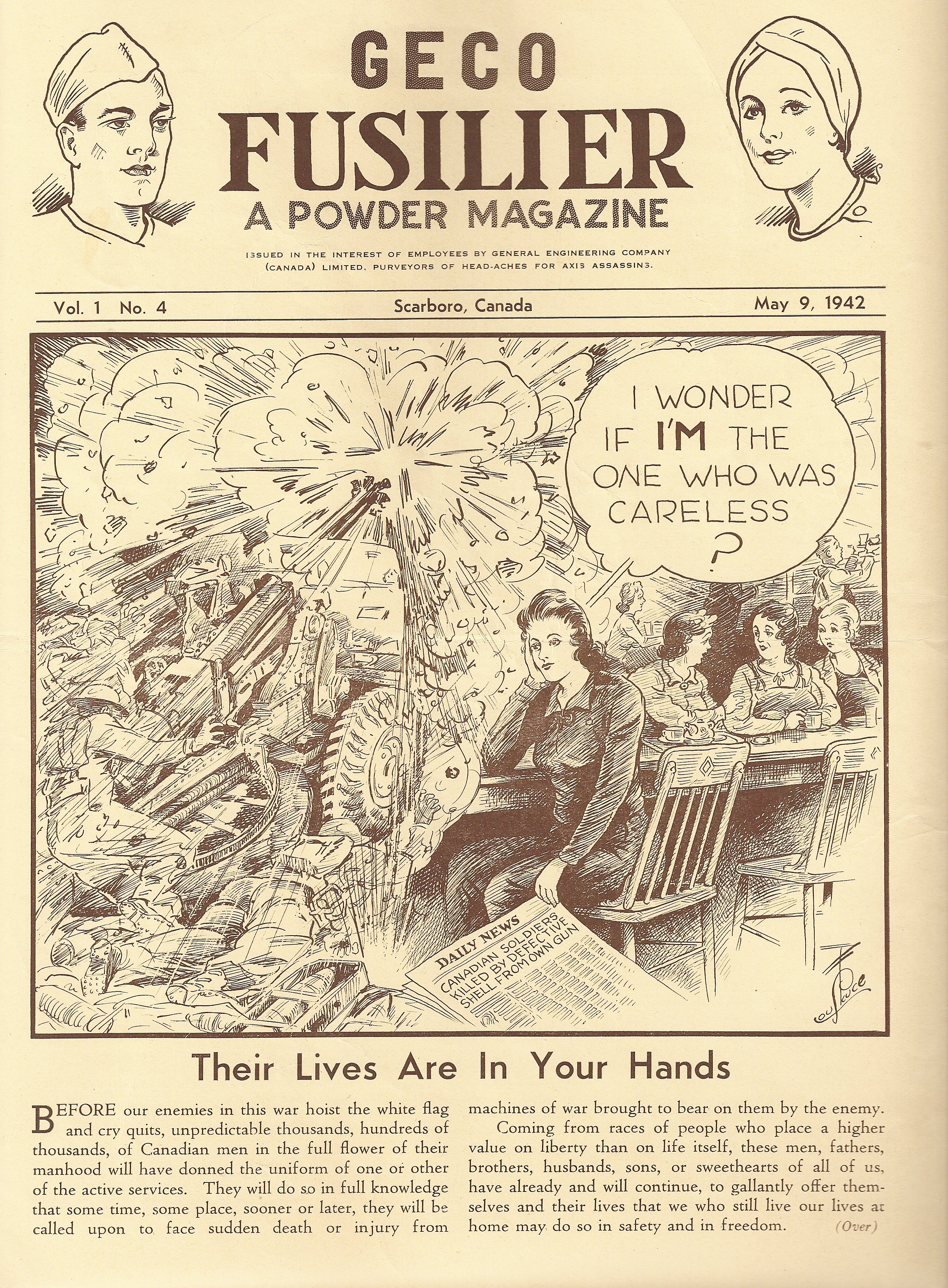
The Scarborough plant published 84 issues of its employee newspaper called GECO Fusilier. Its inaugural edition was published March 28, 1942 and ended with its July 31, 1945 issue. The Bomb Girls Legacy Foundation has 21 issues in its museum collection. Our aim is to acquire a complete set.
GECO Fusilier - May 9, 1942 IssueDuring the Second World War, all domestic manufacturing ceased in Canada with factories across the nation converting their production to make war materials. Such was the case for the General Motors Company in Oshawa. In Oshawa, with a storied beginning dating back to 1879, General Motors of Canada converted to war work in 1939 and produced war materials in mass production including trucks, ambulances, naval gun mounts, 3.7 inch anti-aircraft gun carriages, "Otter" light reconnaissance cars, as well as fuselages for Mosquito light bomber aircraft built by de Havilland. Approximately half of all workers were women; some given jobs that men considered unpleasant or dull. Women not only took on those menial jobs, they did them well and with Canadian pride.
Bomb Girl Hilda Wilson with colleagues at GMC – Oshawa. Hilda is in the back row, 2nd from right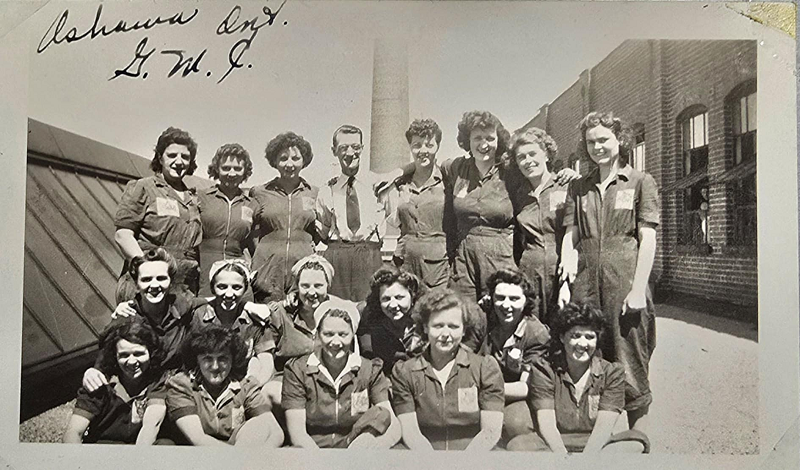
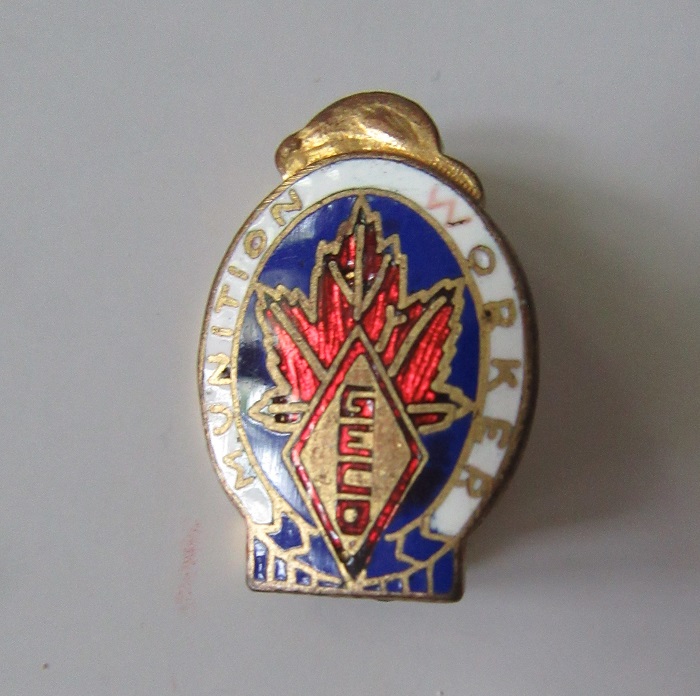
War plants across Canada, in a bid to instill pride in its employees, provided employee pins which could be worn on coat lapels. Most pins have been lost to time – any that remain are mostly found within an employee’s estate. The Bomb Girls Legacy Foundation has 2 GECO pins in its collection. We are actively acquiring pins from all WWII factories.
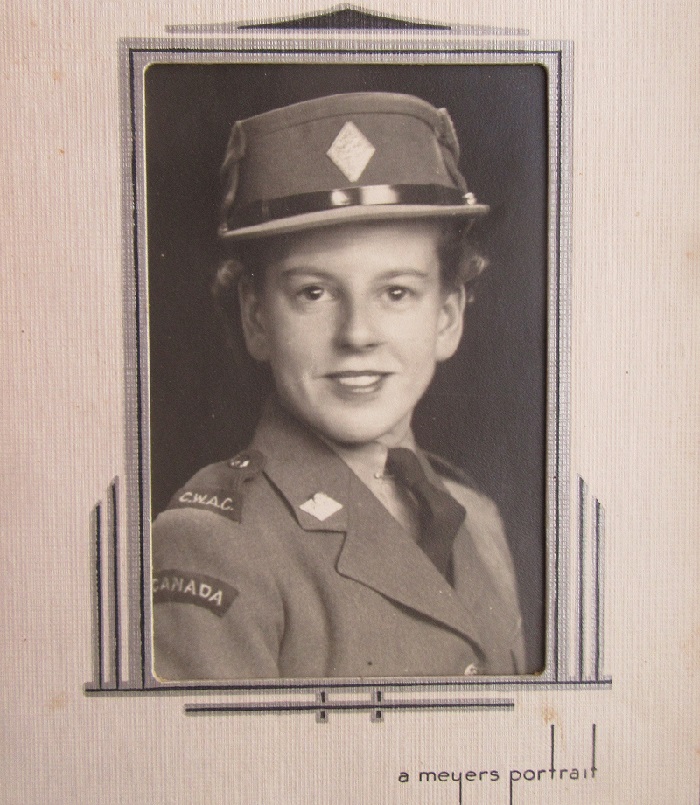
An original GECO employee pin – #6291 etched on its reverse indicating the worker’s employee number. This employee was hired during the factory’s initial hiring campaign in the Fall of 1941.This portrait of a woman who enlisted with the Canadian Women’s Army Corps was gifted to The Bomb Girls Legacy Foundation. This lovely woman answered the call to serve her country. Most CWACs served in Canada. However, by 1943, many were posted in London, England, Rome, and in Belgium. While technically not a “Bomb Girl,” she served her “King and Country” in a different, yet equally important, capacity.
While technically not a “Bomb Girl,” she served her “King and Country” in a different, yet equally important, capacity. We need help in identifying the woman in the portrait
Woman in C.W.A.C. Identity unknown.