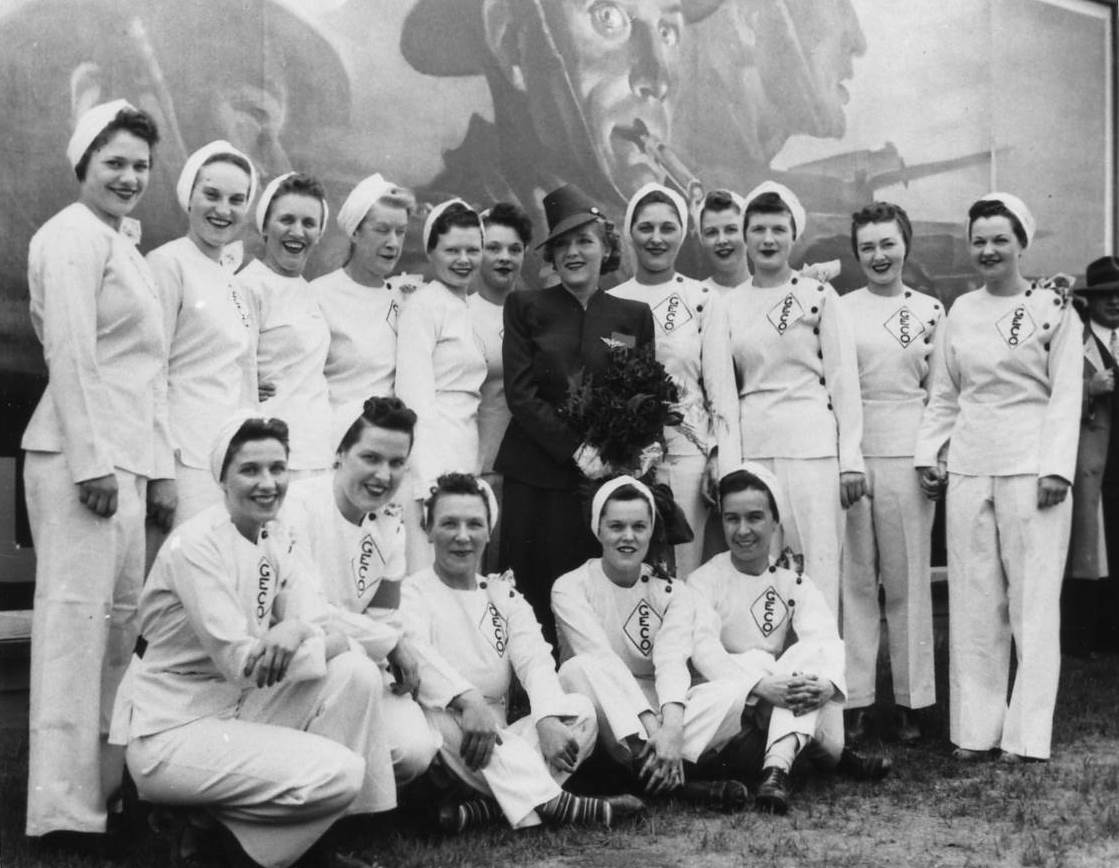
As part of its mission to celebrate the story of Canada’s Bomb Girls, the Bomb Girls Legacy Foundation is working to document the stories of the brave and dedicated heroines of World War Two.
Who were they? Think the iconic image of Rosie the Riveter, to encourage women in the United States to join the domestic war effort. In Canada, our well-founded predecessor to Rosie, Ronnie the Bren Gun Girl worked at John Inglis, and truly symbolized what it meant to be a Bomb Girl. Courageous and determined, Ronnie—based on real-life bomb girl Veronica Foster—revealed from her iconic pose cradling a Bren gun and smoking a cigarette that she was single-minded in her mission to end the war.
Wartime factories sprung up across our great nation to manufacture materiel needed to support the Allied war effort, employing close to a million Canadians by 1942.
The Foundation would like to hear their stories.
We invite anyone who claims a Bomb Girls legacy to share their story with us. That legacy can include the story of a mother, grandmother, aunt or great aunt who toiled during the war in a wartime factory. Perhaps it was a mother who worked at the GECO munitions plant located in Scarborough, Ontario. Maybe your loved one worked alongside Ronnie at John Inglis, or at Research Enterprises Limited, or at Safety Fuse in Brownsburg, Quebec. Whether your loved one laboured to make parachutes, aircraft, fuses, uniforms, or bandages, every story is important to share, to help build that legacy in honouring our forebears who fought here in Canada for our freedom.
These legacies will form part of the Foundation’s database and will include as much detail as possible including name, age, hometown, name and location of the factory where they worked, and the role and duration of their time there. We’re not leaving out the men who worked there either, although the workforce was almost entirely female.
This information will greatly help the Foundation move forward in its mission to celebrate one of Canada’s efforts to end the war by erecting plaques and even preserving some of the very places where Bomb Girls worked.